The Wilmot
Proviso, on a "per word" basis, might well be one of the most
consequential documents in American history. The full text is
given here (below), but the firestorm that it introduced into American
sectional politics cannot be ignored. Thus, my decision to
include it on the website. (As I am typing this, I frankly am
unsure where to put it.)
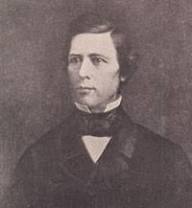
David Wilmot (1814--1868) was born in Bethany, Pennsylvania, in the
northeast corner of the state. After prepatory school, he read
law with William Jessup, and George Washington Woodward, two prominent
jurists in Pennsylvania, and began practicing law in Towanda, in
1834. He was elected to Congress (as a Democrat) in 1844, and
served three consecutive terms, leaving office on March 3, 1851.
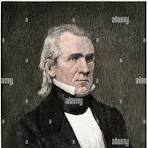
Although initially supportive of his fellow Democratic President, James
K. Polk, Wilmot became increasingly uncomfortable---as did many
Northern Democrats---with Polk's proslavery policies. In August
of 1846, Wilmot attached an amendment (full text, below) to an
appropriations bill designed to fund negotiations with Mexico for
ending the war between that nation and the United States. Like
many "free soil Democrats," Wilmot was not motivated by any moral
opposition to slavery, but by the desire to aid small (whie) landowners
in moving into and succeeding in any new lands obtained from the
war. When his advocacy for the Proviso put him in conflict with
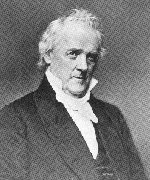
the dominant wing of the Pennsylvania Democratic Party (led by future
President James Buchannan), he declined to run in the 1850
elections. Wilmot then served as a judge in Pennsylvania's
judicial system, until being appointed to finish out Simon Cameron's
Senate term after Cameron was made Secretary of War under Lincoln. He declined
to be re-appointed in 1862, and then served in the Federal judiciary
until his death in 1868.
The Wilmot Proviso passed in the House of Representatives on several
occasions (e.g., 1846 and 1847), but never had a chance in the Senate.
|
|
David Wilmot of Pennsylvania
|
|
President James K. Polk
|
|
James Buchanan of Pennsylvania
|
|